
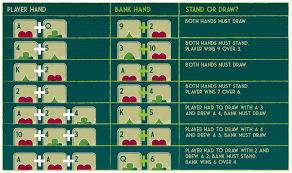
Baccarat is celebrated as the most elegant game on the casino floor, yet newcomers are often puzzled by its core choices: the Banker and the Player. While both options follow identical card-scoring mechanics, their math, third-card rules, and payout structures are completely distinct. This comprehensive guide strips away the mystery to break down the Baccarat Banker vs Player rules, historical odds, and true winning chances so you can wager with absolute confidence.
Understanding the Basics of Baccarat
How Baccarat Is Played
Baccarat is a straightforward comparison game. The objective is simple: bet on which of two hands—the Banker or the Player—will finish with a point total closest to 9. Both sides are dealt two initial cards from a multi-deck shoe.
The Role of the Banker and Player Hands
Despite their names, these options do not represent you or the casino. They are merely two arbitrary labels for the two hands on the felt. As a bettor, you are completely free to back either side on any given round.
How Winning Hands Are Determined
Hand values are calculated by summing the face values of the cards and dropping the tens digit (for instance, a 7 and an 8 equals 15, which becomes a 5-point hand). Face cards and tens count as zero, while aces count as one. Whichever hand finishes closest to 9 wins.
What Is the Player Bet in Baccarat?
How the Player Bet Works
When you place your chips on the Player line, you are wagering that the hand designated as “Player” will outscore the Banker hand.
When the Player Bet Wins
The Player bet wins outright if its final score is higher than the Banker’s score at the conclusion of all drawing sequences.
Player Bet Payouts Explained
The Player bet features a clean 1 to 1 (Even Money) payout structure. A winning $10 wager returns exactly $10 in net profit. The house does not deduct any fees or commissions from this win.
What Is the Banker Bet in Baccarat?
How the Banker Bet Works
A Banker bet wagers that the hand labeled “Banker” will finish with a higher final score than the Player hand.
When the Banker Bet Wins
The Banker bet collects if the Banker hand total beats the Player hand total after all necessary cards are dealt.
Understanding the Banker Commission
Because the Banker hand possesses a built-in mathematical advantage over the Player hand, casinos charge a standard 5% commission on all winning Banker wagers to keep their edge. If you wager $10 on the Banker and win, you walk away with $9.50 in net profit.
Baccarat Banker vs Player Rules
Similarities Between Banker and Player Bets
Both hands use the exact same card pool, follow identical point calculations, and are dealt automatically by the dealer without any input or decision-making required from the players at the table.
Key Differences Players Should Know
The primary difference lies in the third-card drawing logic. The Player hand always acts first. This allows the Banker hand’s rules to be highly reactive to the Player’s total, creating a structural positional advantage.
How Drawing Rules Affect Each Side
The Player’s drawing rules are completely fixed based on its two-card total. The Banker’s rules, however, are fluid and conditional—frequently depending on the specific value of the third card drawn by the Player. This extra layer of defense is why the Banker side consistently hits more often.
Banker vs Player Winning Odds
Historical Winning Percentages
Extensive mathematical modeling of standard 8-deck baccarat shoes reveals a distinct edge:
- Banker Hand: Wins approximately 45.86% of all rounds.
- Player Hand: Wins approximately 44.62% of all rounds.
- Note: The remaining 9.52% of outcomes end in a Tie.
House Edge Comparison
When you eliminate Tie hands from the equation, the structural edge the house holds over the player shifts noticeably:
- Banker Bet: ~1.06% house edge.
- Player Bet: ~1.24% house edge.
Which Bet Wins More Often?
The Banker hand wins more frequently. Even after factoring in the 5% house commission on winning rounds, the Banker bet remains the most statistically profitable wager on the table over long sessions.
Banker vs Player Payout Comparison
How the Third Card Rule Affects Banker and Player
Player Drawing Rules
The Player hand’s rules are simple and intuitive:
- If the initial total is 0 to 5: The Player must draw a third card.
- If the initial total is 6 or 7: The Player must stand.
- If either side hits a 8 or 9 on the first two cards, it is a “Natural” and the round ends immediately.
Banker Drawing Rules
If the Player stands on a 6 or 7, the Banker follows the exact same rules as the Player (hits on 0-5, stands on 6-7). However, if the Player draws a third card, the Banker’s action becomes conditional:
- Banker has 3: Draws unless the Player’s third card was an 8.
- Banker has 4: Draws if the Player’s third card was 2 through 7.
- Banker has 5: Draws if the Player’s third card was 4 through 7.
- Banker has 6: Draws if the Player’s third card was a 6 or 7.
- Banker has 7: Always stands.
Why Banker Has More Complex Rules
The complexity stems entirely from the Banker acting second. By tailoring its draw choices to the specific card the Player just pulled, the Banker maximizes its probability of edging out the Player hand.
Banker vs Player: Which Is Better for Beginners?
Pros and Cons of Betting on Player
- Pros: Straightforward 1:1 payouts with no commission tracking. It is highly intuitive and satisfying for players who prefer cheering for the “Player” side.
- Cons: Carries a slightly higher house edge (1.24%) and hits less frequently over time.
Pros and Cons of Betting on Banker
- Pros: Yields the lowest house edge on the floor (1.06%), offering the best long-term mathematical value for your bankroll.
- Cons: Tracking the 5% commission in your head can be annoying at fast-paced physical tables, and payouts feel slightly reduced due to the fee.
Choosing the Right Option for Your Style
If you want the absolute best mathematical chance to win, always back the Banker. If you prefer clean, even payouts and do not mind sacrificing a tiny fraction of an edge to avoid commission tracking, the Player bet is a completely respectable alternative.
Common Myths About Banker and Player Bets
- Myth: The Banker always wins. Reality: While it wins more often, the Banker still loses roughly 45 out of every 100 hands. It is an edge, not a guarantee.
- Myth: The Player is safer because it lacks commission. Reality: The lack of commission is a psychological trap. The math proves the Player bet costs you more money over long timelines due to its higher house edge.
- Myth: Scoreboards can predict the next hand. Reality: Baccarat is a game of independent events. The shoe has no memory; a long streak of Banker wins does not increase or decrease the odds of the next card being a Player.
Strategies for Betting on Banker or Player
- Default to the Banker: The simplest strategy is a disciplined one. Consistently placing your money on the lowest house edge option is the baseline of smart gambling.
- Strictly Avoid the Tie: The Tie bet template looks appealing with its high 8:1 or 9:1 payout, but it comes with a punishing house edge of over 14%. Avoid it entirely.
- Establish a Stop-Loss: Because baccarat moves incredibly fast, set clear win and loss thresholds before sitting down so you can safeguard your profits.
Banker vs Player in Online Baccarat
How Online Games Apply the Rules Automatically
Playing online removes all technical stress. The software executes the intricate third-card drawing matrix instantly and calculates commission subtractions down to the exact penny automatically, allowing you to focus entirely on managing your stakes.
Variations That May Affect Payouts
Keep an eye out for No Commission Baccarat variations online. In these games, winning Banker bets pay a full 1:1 without a fee, except when the Banker wins with a specific total (usually a 6), which pays out 1 to 2. This alters the house edge dynamically, so always check the specific table rules before buying in.
At first glance, the intricate drawing charts can make baccarat seem intimidating, but the reality is beautifully simple. The dealer manages the technicalities while you manage your chips. By prioritizing the Banker bet for its superior 1.06% house edge, keeping your wagers flat, and avoiding the high-risk Tie bet trap, you can easily turn baccarat into one of the fairest, most enjoyable experiences in the modern casino ecosystem.